
Brand Strategy Journal
What Is Brand Positioning? (And Why Most Businesses Get It Wrong)
Most businesses don’t fail because of poor marketing. They fail because they’re impossible to differentiate. And that almost always comes down to weak positioning.
What Is Brand Positioning?
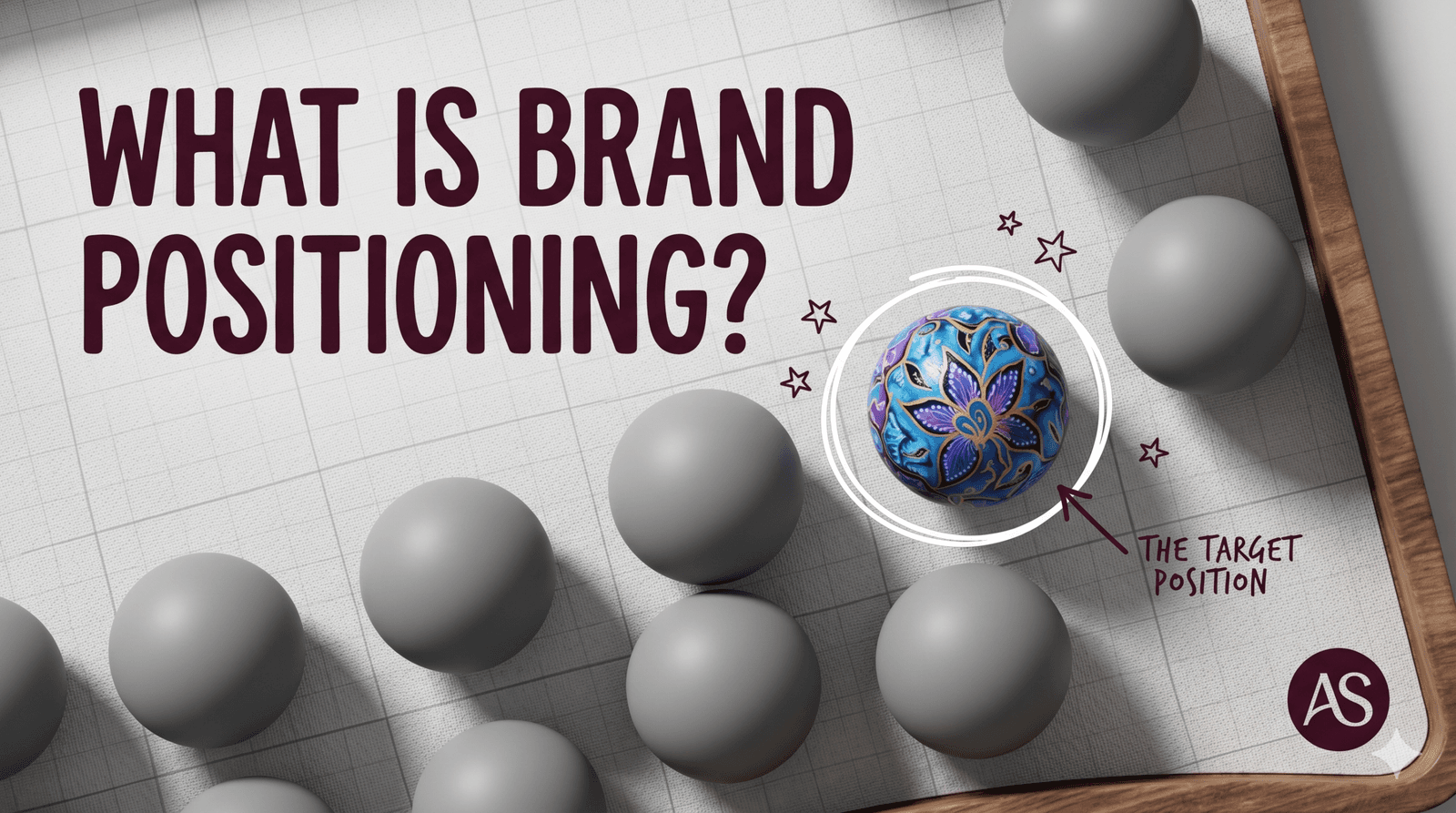
Brand positioning is the space you occupy in your customer’s mind—and more importantly, the reason they choose you over alternatives.
It’s not your tagline. It’s not your logo. And it’s definitely not a paragraph hidden on your About page.
Positioning is a strategic decision. It defines:
- Who you are for
- What problem you solve
- Why you are different
- Why that difference matters
If someone can’t clearly explain why you’re different, you don’t have positioning—you have noise.
And in crowded markets, noise doesn’t convert.
Why Brand Positioning Matters More Than You Think
Most founders underestimate positioning because it doesn’t feel tangible. It’s not as visible as design or as measurable as ads.
But positioning sits upstream of everything.
It influences:
- Your messaging
- Your pricing power
- Your conversion rates
- Your ideal clients
Without strong positioning, every part of your business becomes harder:
- You rely on discounts to close deals
- Your marketing feels inconsistent
- Your brand blends in with competitors
Positioning is not a branding exercise. It’s a business decision that directly impacts revenue.
Why Most Businesses Get Brand Positioning Wrong
This is where things break down.
Most businesses don’t consciously ignore positioning—they misunderstand it.
1. They try to appeal to everyone
Broad positioning feels safe. But in reality, it makes you forgettable.
When your message tries to speak to everyone, it resonates with no one.
2. They copy competitors
Many brands look at what others are doing and replicate it—same promises, same language, same visuals.
This creates category sameness.
3. They focus on features instead of perception
Businesses often talk about what they do instead of how they’re perceived.
Customers don’t buy features—they buy meaning and confidence.
4. They skip strategy and jump to design
One of the most common mistakes is jumping straight into logos, colors, and websites without defining positioning.
Fast-Track Offer
Get Clarity on Your Brand Positioning
If your brand feels unclear or inconsistent, we’ll help you define a positioning that actually converts.
- Positioning clarity audit
- Messaging breakdown
- Strategic differentiation plan
What Strong Brand Positioning Actually Looks Like
Strong positioning is clear, specific, and easy to remember.
It doesn’t try to say everything—it focuses on one compelling idea.
Characteristics of strong positioning
- Focused on a specific audience
- Built around a clear problem
- Communicates a unique approach
- Supported by proof or credibility
When positioning is strong, everything else becomes easier:
- Messaging becomes sharper
- Design becomes more intentional
- Marketing becomes more effective
A Simple Brand Positioning Framework
You don’t need a complicated process to define positioning. You need clarity.
Start with these four elements:
1. Audience
Who are you specifically serving?
2. Problem
What core problem do they face?
3. Approach
How do you solve it differently?
4. Proof
Why should they believe you?
Combine these into a single, clear positioning statement your team can consistently use.
Real-World Positioning Thinking (Without the Buzzwords)
Instead of abstract definitions, think of positioning in terms of choices.
Premium vs affordable. Specialist vs generalist. Fast vs thorough. Simple vs powerful.
Every strong brand makes clear trade-offs.
You don’t become memorable by adding more. You become memorable by choosing what to leave out.
This is where most businesses hesitate—and where strong brands win.
How to Fix Your Brand Positioning
If your positioning feels unclear, don’t rush into a redesign. Start with strategy.
- Audit your current messaging
- Identify where you sound like competitors
- Clarify your audience and offer
- Define one clear positioning angle
Then—and only then—translate that into messaging, visuals, and marketing.
Ready to Build a Positioning That Actually Converts?
We help businesses define clear, differentiated positioning that drives better clients and higher conversions.
Final Takeaway
Brand positioning is not optional. It’s foundational.
If your business struggles to stand out, convert, or scale, the problem is rarely marketing alone.
It’s usually positioning.
Fix that—and everything downstream starts working better.

